Preventing Capacitor Breakdown in High-Load VFD Applications
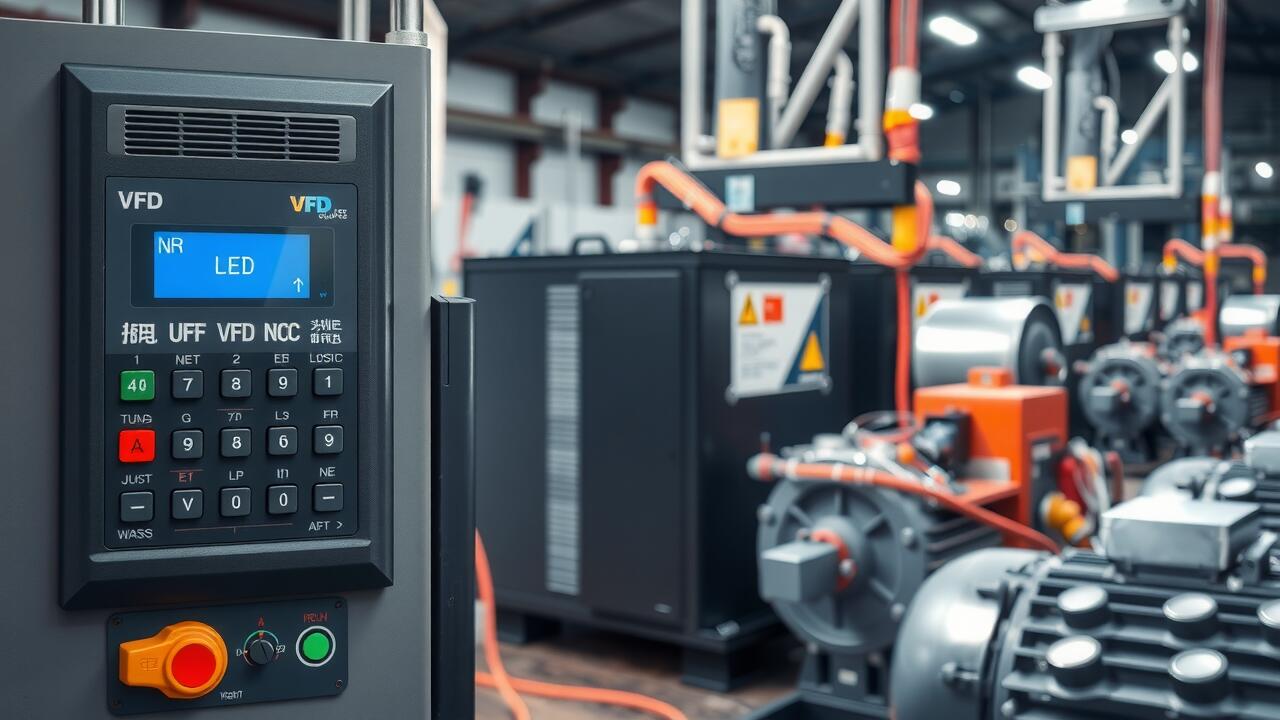
The Role of Circuit Protection in VFD Applications
Circuit protection plays a crucial role in safeguarding variable frequency drives (VFDs) from electrical faults that may compromise system integrity. Implementing devices such as fuses, circuit breakers, and surge protection units can prevent catastrophic failures in high-load applications. For instance, a recent study demonstrated that VFDs equipped with advanced surge protection reduced failure rates by over 30%, significantly lowering maintenance costs related to inverter drive repair. These protective measures not only enhance component lifespan but also contribute to the overall reliability of the system under varying load conditions.
Further integrating circuit protection into the design of VFD applications aligns with industry best practices outlined in standards such as the IEC 61000 series. This framework addresses electromagnetic compatibility (EMC), emphasizing the need for protection against transients that may occur during operation. Electrical overstress events can lead to premature capacitor breakdown. As capacitors are often the first components to fail under excess voltage conditions, ensuring robust circuit protection can prolong their operational lifespan. Proper implementation of protection schemes offers tangible benefits, including reduced downtime and improved performance metrics, which are critical in maintaining effective system operation.
Effective Methods for Reducing Voltage Surges (using fuses and breakers)
Voltage surges can pose significant risks to capacitors in Variable Frequency Drive (VFD) systems. The integration of fuses and circuit breakers serves as a proactive approach to mitigate these surges. Fuses provide a simple yet effective mechanism for overcurrent protection by melting at predetermined current ratings. For example, using time-delay fuses can accommodate brief surge currents associated with motor startup, while still protecting against harmful sustained overloads. Circuit breakers, on the other hand, offer the advantage of reset capabilities, promoting ease of maintenance and operational continuity. These devices not only safeguard against overload conditions but also ensure compliance with industry standards such as UL 508, which governs industrial control equipment.
Utilizing surge protection devices alongside fuses and breakers enhances overall system reliability. For instance, installing transient voltage surge suppressors (TVSS) can protect sensitive components against lightning strikes and electrical noise. Regular maintenance can include testing breaker functionality and verifying fuse integrity, which helps prevent unexpected VFD drive repair scenarios. As capacitor degradation often stems from unregulated voltage levels, implementing these protective strategies can prolong lifespan and improve operational efficiency. Through strategic deployment and routine evaluation, organizations can not only avert costly inverter drive repair interventions but also protect essential VFD systems from detrimental voltage fluctuations.
Implementing Regular Maintenance Protocols
Regular maintenance protocols are essential for ensuring the longevity and reliability of capacitors in variable frequency drive (VFD) applications. Conducting routine inspections allows for the early detection of issues that could lead to capacitor failure. For example, testing insulation resistance biannually can identify degradation over time. Cleaning components to prevent dust buildup aids in heat dissipation, crucial for high-load scenarios. Incorporating a systematic schedule for component replacement, such as every five years, aligns with best practices outlined by the Institute of Electrical and Electronics Engineers (IEEE).
Integrating advanced monitoring technology into these maintenance protocols enhances the ability to preemptively address potential failures. Utilizing predictive analytics software can identify abnormal load patterns indicative of failing capacitors. Tracking parameters like voltage and current fluctuations serves as an early warning system, reducing the likelihood of unexpected downtime. A case study involving a manufacturing facility reported a 30% reduction in unscheduled VFD drive repairs after adopting such preventive measures. These practices not only maximize capacitor lifespan but also significantly reduce operational costs associated with inverter drive repair efforts.
3 Maintenance Tasks to Enhance Capacitor Lifespan (inspections, cleaning, replacements)
Regular inspections are crucial for maintaining capacitors in high-load VFD applications. Technicians should conduct detailed visual and electrical inspections at defined intervals, preferably every six months, to assess the physical condition and electrical performance of capacitors. They must look for signs of bulging, leakage, or discoloration, which can indicate imminent failure. Utilizing tools such as capacitance meters can provide quantifiable data, allowing for better assessment of capacitance values against manufacturer specifications. Early detection of anomalies can significantly reduce the necessity for extensive VFD drive repair later and mitigate overall operational downtime.
Cleaning is another essential maintenance task that extends the lifespan of capacitors. Dust accumulation can create insulating barriers and lead to overheating during operation. Technicians should employ techniques compliant with industry standards, using non-conductive brushes and appropriate cleaning solvents tailored for electronic components. Implementing a routine cleaning schedule, ideally every three months, can enhance the heat dissipation capabilities of capacitors. Additionally, replacing deteriorating capacitors with higher-quality components can also improve the reliability of the entire system. Organizations that adopt this maintenance approach may witness a substantial reduction in inverter drive repair incidents, ultimately improving operational efficiencies.
Analyzing Load Profiles in High-Load Applications
Understanding load profiles is crucial when evaluating the health and performance of capacitors in high-load applications. Capacitors endure stress under fluctuating load conditions. An example can be seen in a manufacturing facility where VFD drive repair scenarios often arise due to varying operational demands. During peak hours, equipment may experience surges, pushing capacitors to operate near their maximum ratings. Properly analyzing and interpreting these load profiles allows for better forecasting of capacitor lifespan and reliability.
Periodic assessment of load characteristics aids in identifying adverse operational patterns. An alarming trend in one facility showed that capacitors were failing 25% more frequently during peak usage times, directly correlating to significant voltage spikes. Adopting robust monitoring solutions can help capture real-time load data, ensuring timely inverter drive repair and maintenance. By implementing proactive strategies to mitigate risk, facilities can enhance operational efficiency and prolong capacitor life, ultimately reducing costly downtimes.
How Load Variations Impact Capacitor Health (understanding operational demands)
Load variations exert a significant influence on the health and performance of capacitors in Variable Frequency Drive (VFD) applications. Rapid changes in electrical demand can lead to voltage spikes that exceed the capacitor’s rated specifications. For instance, a study by the IEEE demonstrated that capacitors operated in environments with fluctuating loads could experience degradation rates as high as 30% over three years compared to stable load conditions. This degradation often manifests in reduced capacitance and increased equivalent series resistance (ESR), directly affecting overall system efficiency and reliability.
Operational demands necessitate a thorough understanding of the load profiles in which capacitors function. A VFD’s ability to control motor speed and torque relies on stable voltage levels, which are vulnerable to disruptions caused by sudden load changes. Implementing advanced monitoring techniques can help identify patterns in load variations, allowing for preemptive measures such as timely inverter drive repair to enhance capacitor lifespan. Industry best practices recommend regular assessments of load profiles, ensuring that capacitors are adequately rated for anticipated operational stresses and reducing the likelihood of premature failures.
The Significance of EMI/RFI Filtration
Electromagnetic interference (EMI) and radio-frequency interference (RFI) can severely impact the performance and reliability of capacitors in VFD applications. High-frequency noise generated by adjacent equipment or within the power supply itself can lead to premature failure or degradation of capacitive components. For example, a study revealed that VFD systems subjected to substantial RFI exhibited a 30% increase in capacitor failure rates compared to those with adequate filtration. Implementing EMI/RFI filters is not merely a recommendation but a best practice to prolong the lifespan of these critical components.
Moreover, the integration of high-efficiency filters within the system design substantially mitigates electrical noise, thus preserving the integrity of the signals processed by the inverter drive. By filtering these interferences, the risk of unexpected faults reduces, enhancing overall system stability. Regular assessments and appropriate filter selections can lower the incidence of VFD drive repairs, ultimately reducing operational downtime and associated costs. Companies must prioritize these strategies to maintain continuous operation, especially in applications where load variations are significant and may contribute to increased electrical stress on capacitors.
What Role Does Filtration Play in Capacitor Longevity? (reducing interference effects)
The integration of EMI/RFI filtration systems serves a critical role in prolonging capacitor longevity within VFD applications. These filters significantly mitigate voltage spikes and electromagnetic interference that can induce premature degradation of capacitors. High-frequency noise and transients can result from equipment interactions and load fluctuations; thus, employing filters leads to a more stable operating environment. For example, a study indicated that facilities utilizing robust EMI filters demonstrated up to a 25% enhancement in capacitor lifespan compared to those without such systems.
Utilizing the right filtration technology can also aid in maximizing system efficiency. By addressing unwanted frequencies, power quality improves, which positively impacts the overall health of critical components, including capacitors in inverter drives. Regular monitoring of voltage ripple and the implementation of appropriate filtering solutions can lead to fewer instances of VFD drive repair and inverter drive repair. Best practices suggest incorporating high-frequency chokes and capacitors in series as a means to achieve effective noise suppression.
Utilizing Advanced Monitoring Technology
Advanced monitoring technology serves as a critical tool in managing the operational integrity of variable frequency drives (VFDs). One notable example is the implementation of real-time data analytics that tracks capacitor health and performance metrics. By utilizing sensors capable of measuring voltage, current, and temperature, facilities can identify early warning signs of capacitor degradation. For instance, studies indicate that continuous monitoring can reduce instances of unexpected failures by up to 30%. Such proactive measures mitigate the likelihood of requiring extensive VFD drive repair efforts, preserving both resources and uptime.
Incorporating predictive maintenance strategies enhances the benefits of monitoring technology. Leveraging machine learning algorithms to analyze historical performance data allows for more precise forecasting of component lifetimes. A case study involving a manufacturing facility demonstrated that integrating advanced technology led to a 20% improvement in system reliability and a significant reduction in inverter drive repair incidents. The adoption of this technology not only optimizes performance but also aligns with best practices outlined by the Institute of Electrical and Electronics Engineers (IEEE) for maintaining elastomeric capacitors in high-load applications. Regular updates to monitoring systems can further improve data accuracy, leading to increased operational efficiency and minimized risks associated with capacitor failure.
Conclusion
Ensuring the longevity and reliability of capacitors in high-load VFD applications is paramount for operational efficiency. Employing sophisticated monitoring technologies and integrating effective circuit protection methods can mitigate the risk of capacitor breakdown. For instance, strategic implementation of surge protection devices can significantly reduce voltage spikes that adversely affect capacitor health. Regular maintenance, including timely inspections and cleaning, complements these proactive measures, ensuring that systems operate within optimal parameters. Adhering to industry standards such as the National Electric Code (NEC) enhances safety and performance in VFD environments.
The role of complete load analysis cannot be overlooked. Detailed examinations of load profiles assist in understanding how varying operational demands influence capacitor performance. Incorporating advanced filtering techniques for EMI and RFI interference further extends the life of capacitors by reducing the adverse effects attributed to electromagnetic disturbances. All these strategies combined lay a solid foundation for preventing issues that may necessitate VFD drive repair or inverter drive repair, thereby enhancing overall system reliability and efficiency in high-load applications.
FAQS
What are the common causes of capacitor breakdown in high-load VFD applications?
Common causes of capacitor breakdown in high-load VFD applications include voltage surges, excessive heat, poor circuit protection, and inadequate maintenance practices.
How can circuit protection help in preventing capacitor failure?
Circuit protection, such as fuses and breakers, helps prevent capacitor failure by safeguarding the circuit from voltage surges and overcurrents, thereby reducing the risk of damage to the capacitors.
What maintenance tasks are essential for enhancing capacitor lifespan in VFD systems?
Essential maintenance tasks for enhancing capacitor lifespan include regular inspections, cleaning of components, and timely replacements of worn or damaged capacitors.
How do load variations affect the health of capacitors in VFD applications?
Load variations can lead to fluctuations in voltage and current that stress capacitors, potentially resulting in overheating and premature failure. Understanding these operational demands is crucial for effective capacitor management.
Why is EMI/RFI filtration important for capacitor longevity?
EMI (Electromagnetic Interference) and RFI (Radio Frequency Interference) filtration are important as they minimize interference effects that can degrade capacitor performance, thus contributing to a longer operational life.
What advanced monitoring technologies can be utilized to prevent capacitor breakdown?
Advanced monitoring technologies, such as real-time data analytics, temperature sensors, and voltage monitoring systems, can be utilized to track capacitor performance and detect early signs of potential failure, allowing for proactive maintenance.